
10 Top Signs of Foundation Damage at Home
October 6, 2026
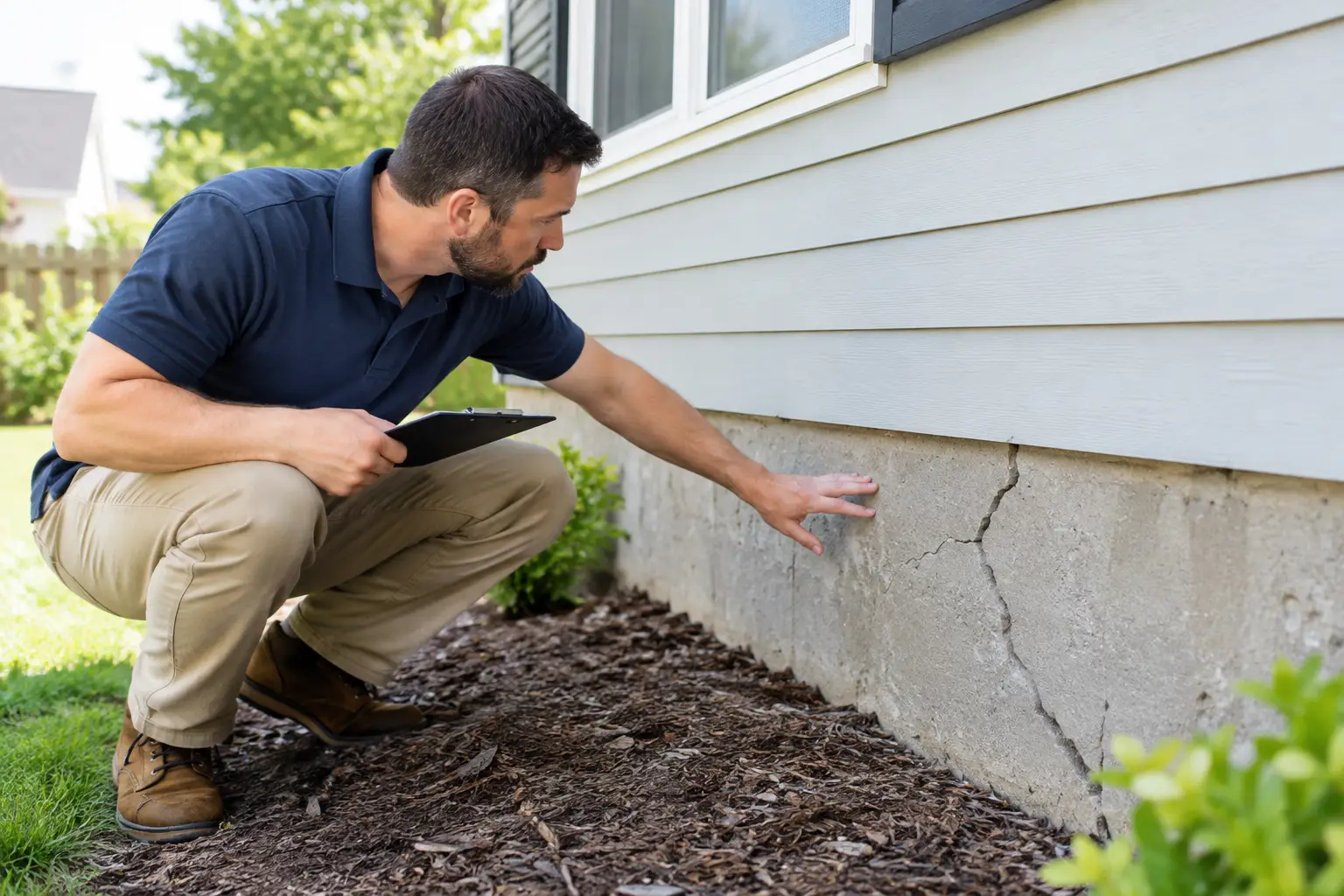
A bedroom door that suddenly sticks after years of closing normally is easy to dismiss. So is a thin crack above a window or a small gap where the patio meets the house. But when those changes appear together or continue getting worse, they can be early warnings that deserve a closer look.
The top signs of foundation damage are not always dramatic, and not every crack means your home is structurally unsafe. Homes settle, building materials expand and contract, and minor cosmetic flaws are common. The concern is movement that is new, progressing, widespread, or paired with moisture and drainage problems.
1. Cracks in Interior Walls, Ceilings, or Trim
Hairline cracks in drywall are often cosmetic, especially near seams or in recently painted rooms. A crack becomes more concerning when it is wider than about one-eighth inch, grows over time, or forms a diagonal line from the corner of a door or window.
Watch for cracks that reappear after patching, spread across multiple rooms, or run through both wall and ceiling surfaces. Separation between crown molding and the ceiling, or between baseboards and the floor, can also point to movement below the finished surfaces.
Drywall alone cannot diagnose a foundation problem. Seasonal humidity, roof framing movement, and ordinary aging can produce similar symptoms. The pattern matters more than a single crack.
2. Doors and Windows That Stick or No Longer Latch
A door that rubs the frame, swings open by itself, or leaves an uneven gap can indicate that part of the structure has shifted. Windows may become difficult to open, fail to lock, or show new gaps around their frames.
One sticking door may be caused by humidity, loose hinges, or a swollen wood door. Several sticking doors and windows on the same level are more meaningful, particularly when they accompany wall cracks or uneven floors. Take note of when the issue started and whether it changes with wet or dry weather. That information can help a qualified professional identify the source.
3. Uneven, Sloping, or Bouncy Floors
Floors should not feel like a perfect level surface in every older home. Small variations are common, particularly in properties with additions or long spans of wood framing. What deserves attention is a floor that feels noticeably sloped, soft, bouncy, or newly uneven.
A rolling marble or a phone-level app can provide a rough indication, but neither replaces a professional assessment. Floor movement may be related to foundation settlement, deteriorated floor joists, a failing beam, moisture damage in a crawl space, or inadequate support beneath an addition. The repair approach depends on the cause, which is why a generic quote for “foundation repair” may not be enough.
4. Exterior Cracks in Brick, Concrete, or Stucco
Exterior masonry can provide some of the clearest top signs of foundation damage. Look for stair-step cracks following mortar joints in brick, diagonal cracks extending from window corners, or widening gaps between brick veneer and framing.
Concrete foundation walls can develop small shrinkage cracks, especially in newer construction. Vertical hairline cracks are often less urgent than horizontal cracks, cracks that are widening, or cracks with a visible offset from one side to the other. A horizontal crack in a basement wall may indicate pressure from saturated soil outside the home and should be evaluated promptly.
Stucco cracks can be cosmetic or structural, so it is useful to document their location and size with dated photos. If a crack continues across multiple materials, such as stucco, trim, and masonry, it warrants closer attention.
5. Gaps Around Chimneys, Porches, and Exterior Attachments
A chimney that appears to lean away from the house, a porch pulling away from the main structure, or a deck shifting at its connection point can signal differential movement. That means one area is moving at a different rate than another.
Some exterior features have separate footings and may settle independently without affecting the home’s primary foundation. Still, visible separation should not be ignored. A contractor or structural professional can determine whether the issue is limited to the attached structure or connected to broader site and foundation conditions.
6. Water in the Basement or Crawl Space
Water does not automatically mean foundation failure, but it is one of the conditions most likely to create or worsen it. Standing water, recurring dampness, white mineral deposits on foundation walls, musty odors, or mold growth can indicate that moisture is entering or collecting where it should not.
Poor drainage can soften soils, increase hydrostatic pressure against basement walls, and contribute to settlement or wall movement. Check whether gutters discharge close to the home, whether downspouts are working, and whether the ground slopes toward the foundation. Irrigation leaks, broken underground lines, and plumbing leaks can create similar problems.
Solving drainage may be part of the repair, not an optional add-on. A proposal that addresses only interior crack patching while ignoring the source of water may offer a short-lived result.
7. Bowing, Leaning, or Bulging Foundation Walls
Bowing or bulging basement walls should be treated as a priority. Soil pressure, water pressure, expansive clay soils, tree roots, or long-term drainage failures can push foundation walls inward. In severe cases, the wall may crack, shift, or lose its ability to safely support the structure above.
Do not wait for a wall to look dramatically distorted. Horizontal cracks, inward movement, and new displacement around basement windows are reasons to schedule an evaluation. If you see sudden movement, major cracking, or a wall that appears unstable, keep people away from the affected area and seek prompt professional guidance.
8. Cracked or Separated Slabs
Garage slabs, basement slabs, sidewalks, and patios commonly crack over time. A slab crack is more concerning when one side is higher than the other, when it is widening, or when it allows water to enter below the structure.
Not every slab is part of the home’s load-bearing foundation. A cracked patio slab may be a localized concrete issue, while a crack through an interior structural slab can require a more detailed investigation. Ask the professional evaluating the property to explain exactly which concrete elements are structural and which are not.
9. New Plumbing Problems or Persistent Drain Issues
Foundation movement can affect plumbing lines beneath a slab or in a crawl space. Repeated drain backups, unexplained drops in water pressure, damp spots on flooring, or a sudden increase in water bills may point to a plumbing leak rather than a foundation issue. In some cases, the two problems are connected.
A leaking line can wash out or saturate supporting soil. Conversely, soil movement can strain or break pipes. Before committing to a major structural repair, make sure the scope accounts for plumbing testing when the symptoms suggest it. Treating only the visible damage can leave the underlying cause in place.
10. A Pattern of Changes That Continues to Progress
The most useful warning sign is often not one symptom but a pattern. A diagonal crack, a sticking door, dampness in the crawl space, and a sloping floor together tell a more complete story than any one issue alone.
Document what you see. Take clear photos with dates, measure larger cracks, and make notes about recent storms, nearby excavation, plumbing repairs, or changes in drainage. This record helps professionals understand whether the condition is stable, seasonal, or actively progressing.
What to Do When You Notice Foundation Warning Signs
Start by addressing obvious water-management issues, such as overflowing gutters, downspouts that empty beside the house, or soil that slopes toward the foundation. Do not cover cracks with caulk or fresh paint before they are photographed and evaluated. Cosmetic repairs can hide useful evidence without solving movement underneath.
For signs that are widespread, worsening, or structural in nature, request detailed evaluations from qualified local professionals. Depending on the symptoms, that may include a foundation repair contractor, drainage specialist, plumber, or structural engineer. An engineer can be especially useful when the cause is unclear, the property has significant movement, or you need an independent repair recommendation.
When comparing proposals, look beyond the price. Confirm the diagnosis, the exact repair method, the areas included, drainage or plumbing work required, permit responsibility, warranty terms, timeline, and how landscaping, flooring, or finished walls will be handled. Two estimates can have very different scopes even when both are labeled “foundation repair.”
With Getstimate, you can describe the condition once, add photos or plans, and compare proposals side by side before choosing who receives your contact details. That gives you more control over a high-stakes repair and a clearer view of what each professional is actually proposing.
Foundation concerns can feel overwhelming, but early documentation and a well-defined scope put you in a stronger position. The right next step is not to guess at the repair - it is to get a clear explanation of what is moving, why it is moving, and what will keep it from happening again.